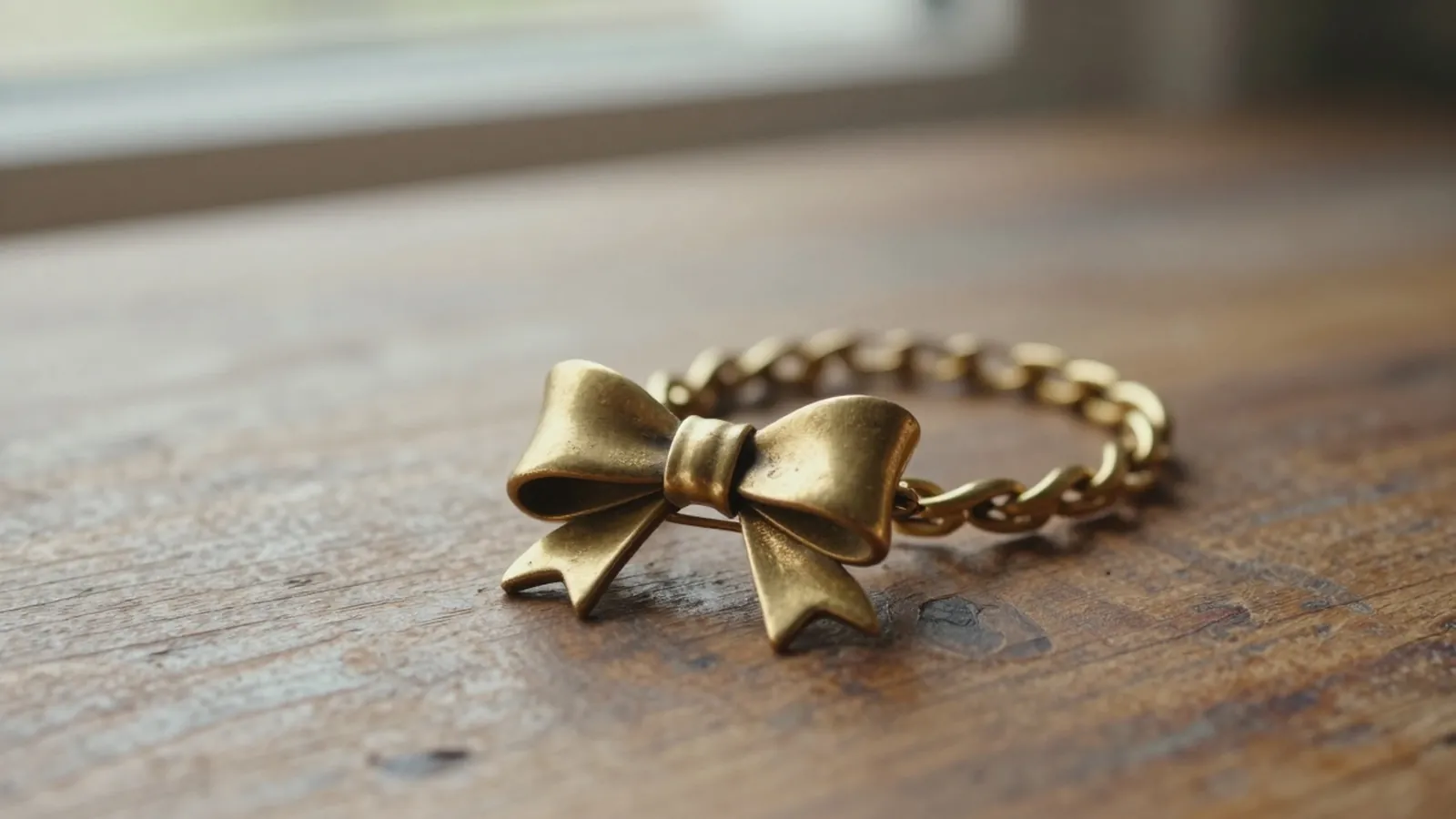
Monet jewelry value is the price one specific Monet piece would realistically bring from a buyer today, and for most pieces it's set by era, design, plating condition and completeness rather than metal content. Monet made plated costume jewelry, so the gold layer adds little. Early marks, crisp plating and original clasps or tags push a piece up; worn plating pulls it down.
Monet jewelry value means what one identified piece is worth on a given day to a willing buyer, not a single price for the whole brand. The IRS describes fair market value as the price agreed between a willing buyer and a willing seller, neither forced to act and both reasonably informed. That's the most useful frame for costume jewelry. Monet began as Monocraft Products Co., founded in 1927 by brothers Michael and Joseff Chernow, and launched Monet Jewelers as a subsidiary in 1937. Nearly everything the firm made is plated base metal, so gold content rarely drives the price. Four things do: the era you can read from the mark, the design and how much collectors want that motif, the condition of the plating and the clasps, and completeness, such as a matching set or an original hang tag. Prices you see online mix asking prices on active listings with completed sales. The two can sit far apart. For most pieces, the honest check is to compare yours with completed sales of the same type, era and condition. A formal appraisal for insurance or a charitable donation is a separate question with its own rules.
What Monet Jewelry Value Actually Measures
A price for Monet jewelry only means something once you know which kind of number it is. Three get mixed up all the time.
- Asking price: what a seller hopes to get on an active listing. It's an opinion, not a result.
- Completed sale: what a buyer actually paid. This is the closest thing to market value.
- Appraised value: a number an appraiser writes for a specific purpose, and the purpose changes the number.
The IRS explains the gap clearly in Publication 561. Fair market value is the price between a willing buyer and a willing seller who both know the relevant facts. An appraisal done so an insurer can reimburse stolen jewelry reflects replacement cost instead. The IRS says it isn't the fair market value of that jewelry. It also notes that sentimental personal value has no effect on fair market value, though ownership by a famous person might raise it.
So your grandmother's Monet necklace is worth what a stranger would pay for it today, not what it cost new or what it means to you.
How to Date Monet Jewelry by Its Mark
The mark is your best dating tool. According to Antique Trader's history of the firm, these are the main signals:
- "Monocraft" in block letters. Monocraft Products Co. was founded in 1927 and made metal monograms for purses, then monogram jewelry in the 1930s, including the "Dangles" and "Click-Its" lines. These are the oldest pieces, and none of the early marks are easy to find today.
- A small metal hang tag reading "Monet Jewelers", with "Jewelers" in script. Look for it on necklaces and bracelets made from 1937 until the mid-1940s.
- "Monét" in a serif typeface, with an accent over the e. This marks early brooches and dress clips from the same period.
- "MONET" with no accent. It's the mark used on later Monet production.
A mark narrows the era; it doesn't prove an exact year. If you want a full reference, Alice Vega's book Monet: The Master Jewelers is the dedicated history of the company. Early pieces with enameling or rhinestones were made only in limited quantities through the mid-1940s, which is part of why they draw more interest.
Is Monet Jewelry Real Gold? Reading the Plating Terms
Most Monet is gold-tone or silver-tone plated base metal. Words like "gold plate" on a piece describe a thin surface layer, and the FTC Jewelry Guides (16 CFR 23.3) set minimums for what each term can mean.
| Term on the piece or listing | FTC minimum under 16 CFR 23.3 | What it tells you |
|---|---|---|
| Gold Plate / Gold Electroplate | At least 10 karat gold, at least 0.175 microns (about 7/1,000,000ths of an inch) thick throughout | A very thin surface layer |
| Heavy Gold Electroplate | At least 2 1/2 microns (about 100/1,000,000ths of an inch) of fine gold | Thicker, still a surface coat |
| Rolled Gold Plate | Mechanically bonded gold alloy of at least 1/40th of the metal weight | A bonded layer, not solid gold |
| Gold Filled | Mechanically bonded gold alloy of at least 1/20th of the metal weight | The thickest of these, still not solid gold |
These terms set a thickness floor; they don't add scrap value worth counting. That's why melt value is the wrong way to think about Monet. The design, the era and how well the plating survived matter far more than the gold on the surface.
What Raises or Lowers Vintage Monet Jewelry Value
Once you know the era, condition decides where a piece lands.
Pushes value up
- An early mark (Monocraft, Monet Jewelers tag, accented Monét).
- Plating that's even and bright, with no base metal showing on high points.
- Original, working clasps, pin backs and ear clips.
- A complete set, such as a necklace with matching earrings or bracelet.
- An original hang tag or box.
Pulls value down
- Worn plating, pitting or green corrosion around joints.
- Replaced findings or a mismatched clasp.
- Broken links, bent pins, missing stones or chipped enamel.
- A single earring from a pair.
Antique Trader notes that the condition of early pieces largely depends on how they were stored, and that higher prices should be reserved for pieces in excellent condition. Look at the back and the clasp under good light before you compare prices; that's where wear shows first.
How to Check What Your Monet Piece Is Worth
You can build a realistic range with five checks.
- Write a one-line description. Type, mark, era, color, and size. For example: "Monet gold-tone link bracelet, MONET mark, fold-over clasp."
- Search completed sales, not active listings. On marketplaces that offer it, turn on the sold or completed filter. Active listings show what sellers want, not what buyers pay.
- Match condition honestly. Compare worn plating with worn plating. Mint examples in a photo set the top of a range, not the middle.
- Count your comparables. Three or four matching sales tell you more than one high outlier.
- Note the selling venue. Dealer shops, online marketplaces and estate sales reach different buyers, so prices differ for the same piece.
If you aren't sure what the piece is, start there. A quick photo read with Antique Identifier: Antiqly can suggest a name, a period and how the mark reads before you start searching listings.
When a Monet Piece Needs an Appraiser
Most single Monet pieces don't need a formal appraisal, because the appraiser's fee can be more than the piece would sell for. A few situations do call for one.
- Donations. IRS Publication 561 says a donation of art or collectibles claimed at more than $5,000 must be supported by a qualified appraisal and Form 8283. A large jewelry collection donated together can cross that line.
- Insurance schedules. Insurers want replacement cost, which is a different number from resale value.
- Mixed estates. If a jewelry box holds Monet alongside pieces that might be solid gold or set with real stones, those need a trained eye; IRS guidance notes that gems and jewelry almost always require a specialized jewelry appraiser.
Look for an appraiser through the American Society of Appraisers, the International Society of Appraisers or the Appraisers Association of America. Ask for a flat or hourly fee and avoid anyone who charges a percentage of the appraised value.
Getting a First Read With Antiqly
If you're holding a piece and don't know where to begin, a photo is a reasonable first step. Antique Identifier: Antiqly identifies antiques from a photo and suggests a name, period, origin and a short history of the piece. You can add up to four extra photos, such as the mark on the back, the clasp or any damage, plus a short note to steer the identification. If a maker's mark is visible, Antiqly describes it and gives its interpretation with a confidence level.
The price it shows is a range based on comparable secondhand listings, with the number of listings it's based on. It's an estimate, not an appraisal, and it doesn't replace checking completed sales or hiring an appraiser for a valuable piece. Antiqly is available on iOS and Android.
Common questions
How much is Monet jewelry worth?
It depends on the specific piece. Most later Monet with the plain MONET mark is affordable costume jewelry, while early Monocraft or Monet Jewelers pieces in excellent condition draw more interest. The reliable way to find a number is to compare completed sales of the same type, era and condition.
Is Monet jewelry real gold?
Generally no. Monet is mostly gold-tone or silver-tone plated base metal. Under the FTC Jewelry Guides, "gold plate" can mean a layer as thin as 0.175 microns, so the gold adds little to the price.
What is the most valuable Monet jewelry?
Early pieces tend to draw the most collector interest: Monocraft monogram jewelry from the 1930s, and Monet Jewelers pieces from 1937 to the mid-1940s, especially the limited enameled or rhinestone designs. Condition still decides the final price.
How do I tell how old my Monet piece is?
Check the mark. Block-letter Monocraft is the earliest, a Monet Jewelers hang tag or an accented Monét points to 1937 through the mid-1940s, and a plain MONET mark is later production. A mark narrows the era but doesn't give an exact year.